Alfredo Sinclair
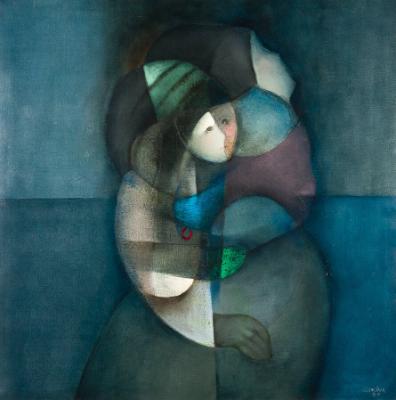
Panamanian painter. He studied under Humberto Ivaldi in Panama and at the Escuela Superior de Bellas Artes Ernesto de la Cárcova in Buenos Aires, where he was first exposed to abstract art and international trends. During the 1940s and 1950s, he experimented with academic, Cubist and Abstract Expressionist styles, before defining a semi-abstract approach emphasizing color and light. He made numerous collages, such as Fish (1968; Panama City, Mus. A. Contemp.), in which he sometimes incorporated fragments of colored glass, a reference to his earlier occupation as a maker of neon signs. In the 1970s, the figurative references in Sinclair’s paintings were reduced to small, virginal faces among abstract shapes; some works, such as the small color studies called Stains (e.g. Mancha, 1971; Panama City, Mus. A. Contemp.), are completely abstract. Another series, Movements of a River (e.g. 1981; Panama City, Mus. A. Contemp.), consists of simplified and monumental forms of luminous color with soft, dark contours and a stained-glass quality that is typical of Sinclair’s lyrical abstraction. A smooth and glossy surface and bright, translucent colors contribute to a mystical and contemplative effect in keeping with Sinclair’s religious nature.
Source: http://www.oxfordartonline.com/subscriber/article/grove/art/T078911?q=alfredo+sinclair&search=quick&pos=1&_start=1#firsthit